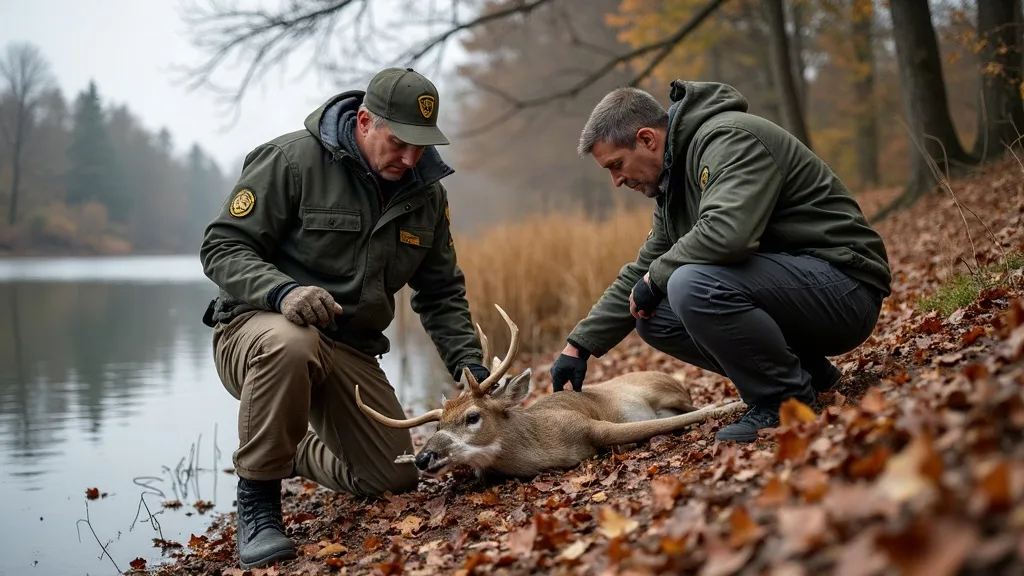
Ten deer found dead along Black River; DEC confirms bluetongue in one sample
Ten deer were found dead earlier this month along the Black River between Carthage and Lowville, and the New York State Department of Environmental Conservation said one sample tested positive for bluetongue virus.
By Caleb Mercer, ClickNNY North Country Desk
Ten deer were found dead earlier this month along the Black River between Carthage and Lowville, and the New York State Department of Environmental Conservation said one sample tested positive for bluetongue virus. The finding matters because bluetongue and the related epizootic hemorrhagic disease can kill deer during the warmer months, although the viruses do not affect people or pets, according to DEC.
What DEC found
The DEC said one sample from the deer tested positive for bluetongue virus. The agency has not characterized the deaths as a human or pet health threat. Bluetongue and epizootic hemorrhagic disease are spread by infected biting midges, small insects sometimes called no-see-ums.
The diseases typically spread in late summer and early fall. The first hard frost kills the midges and ends transmission, according to DEC. Deer can sometimes survive an infection, while other deer may die within several days of becoming sick.
The middle section of the Black River runs about 40 miles from Lyons Falls to Carthage and is used for fishing and canoeing. The deer were found along the river between Carthage and Lowville, an area that includes portions of the Black River corridor in Lewis and Jefferson counties.
Cornell wildlife disease ecologist Krysten Schuler said the deaths do not represent an outbreak, although finding multiple dead deer can be alarming. The DEC's wildlife-health information says the viruses are not known to affect humans or pets.
A recurring seasonal disease
Bluetongue was first confirmed in New York deer in September 2022, when three deer in Southampton, Suffolk County, tested positive, according to a DEC release. DEC received more than 2,000 reports of dead deer in 2021, mainly in Ulster, Dutchess, Columbia, Oswego and Jefferson counties.
DEC's outbreak table for 2021 lists Jefferson and St. Lawrence counties among the affected counties. Lewis County does not appear in that table. The disease activity is associated with the period before a hard frost ends the midges' transmission cycle.
The finding is relevant to residents who spend time along the Black River and other wooded or wet areas in Jefferson, Lewis and St. Lawrence counties, including people fishing, canoeing, hunting or walking near the water. DEC advises against harvesting or eating a deer that appears sick.
How to report deer
People who see sick or dead deer can submit a report through the DEC's online EHD reporting form or contact the nearest DEC regional wildlife office. Reports help the agency track disease activity and determine where additional testing may be needed.
DEC's information about the diseases, symptoms and reporting options is available on its wildlife-health page. Transmission generally ends after the first hard frost kills the midges, but residents should continue reporting sick or dead deer while seasonal disease activity is possible.
Reported by ClickNNY and reviewed by an editor before publication.
More from ClickNNY
Guides and features from across the North Country.

ClickNNY Special Report · Technology
The Good. The Bad. The Rogue.
AI agents are here, working for us, being used against us and, it appears, sometimes doing what nobody told them to. What it means for North Country jobs, money and privacy, and what is still unanswered.
ClickNNY Guide · Community
Halloween poisoning hazards in the North Country: what parents should know
The Upstate New York Poison Center advises families to secure medicines, cannabis, alcohol, batteries and Halloween products, and to call its free 24/7 helpline at 1-800-222-1222 after a possible poisoning.
ClickNNY Special Report · Road Safety
Sharing the Road, Risking Their Lives
Four people died in two buggy crashes in New York in less than two weeks this fall, both in broad daylight. What drivers, Amish families and the officials who run our roads each owe the next family on the road.